Product Description
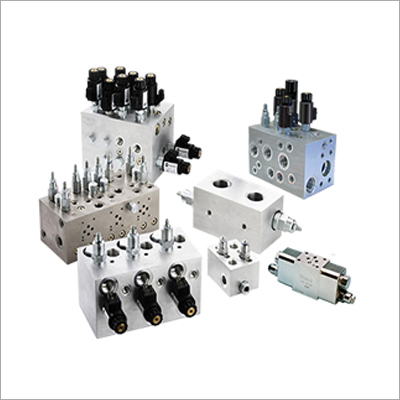
Buy from us highly durable multi-port Hydraulic Manifold Blocks designed to deliver fluid within different flow sections. This sturdy fluid direction control unit is machined with high precision and accuracy using advanced production technologies which makes it free from manufacturing flaws. It is available in various designs and sizes that can be customized as per customer demands. The connecting ports are this unit are provided with fastening threads to rigidly install pressure hoses. The offered Hydraulic Manifold Blocks can be used in corrosive and non-corrosive systems due to high rust-resistance. Get this premium quality fluid direction controller at a reasonable price.
Engineered for Performance and DurabilityOur manifold blocks are meticulously constructed using solid high-grade aluminum alloy or mild steel, ensuring superior durability even under rigorous industrial conditions. The precision-machined ports, with force handling up to 250 kN and compatible with high-speed operations, guarantee minimal pressure drop and optimal flow. Surface finishes like hard anodizing, plating, or painting add extra protection against corrosion, maintaining efficiency across a temperature range of -20C to +80C.
Customization and Versatility for Every ApplicationWith port sizes from 1/4" to 1-1/2" and station numbers ranging from 2 to 12, our hydraulic manifold blocks adapt seamlessly to diverse requirements. Each block can be customized for port drilling, dimensions, and mounting options. Whether you need modular, subplate, or threaded mounting, we provide both standard and tailored configurations for industrial, mobile, and automation uses.
Reliability and Compliance AssuredEvery manifold block undergoes individual pressure testing to guarantee leak-proof and efficient hydraulic operation. Our products conform to ISO and CETOP standards, ensuring compatibility and reliability when integrated into your system. With robust sealing using Buna-N or Viton O-rings and standard hydraulic connections (BSP/NPT/SAE), operational integrity is always at the forefront.
FAQs of Hydraulic Manifold Blocks:
Q: How do I select the right number of stations for my hydraulic manifold block?
A: Choosing the appropriate number of stations depends on how many hydraulic devices or actuators you need to control from a single block. We offer 2 to 12 station configurations to match a range of system complexities, ensuring flexibility for both compact and expansive hydraulic setups.
Q: What fluids are compatible with your hydraulic manifold blocks?
A: Our manifold blocks are designed to accommodate both mineral oils and synthetic fluids commonly used in hydraulic systems. The internal seals are compatible with these fluid types, ensuring long-term leak-proof operation and system reliability.
Q: Where can hydraulic manifold blocks be installed?
A: These blocks are suitable for installation in various environments, including industrial hydraulic systems, mobile equipment, automation lines, and machine tools. Depending on your mounting preference, options include modular, subplate, or threaded installations for seamless integration.
Q: What is the process for custom port drilling or configurations?
A: Customizations begin with a consultation to identify your exact requirements. You can specify port sizes, positions, and block dimensions, and our engineering team will design and manufacture the block accordingly. Each customized block is individually pressure tested for quality assurance.
Q: How do your manifold blocks ensure leak-proof performance?
A: Every block is precision-machined and individually pressure tested. We use Buna-N or Viton O-ring seals and high-strength body materials with optimized flow channels to minimize the risk of leaks, ensuring consistent, efficient operation.
Q: What are the benefits of using your hydraulic manifold blocks?
A: Our manifold blocks offer high strength, precise port alignment, and corrosion resistance. Their efficient internal channel design provides minimal pressure drop, and their compliance with ISO and CETOP standards ensures compatibility and long-term reliability.
Q: When should I consider using accessories like diagnostic ports or O-ring kits?
A: Accessories such as diagnostic ports are useful for system monitoring and maintenance, allowing for pressure readings or troubleshooting. O-ring kits are recommended for servicing and ensuring the integrity of sealing over time.

 Mon-Sat 9.00 AM - 6.00 PM






 Send Inquiry
 Send Inquiry
 Send SMS
