Product Description
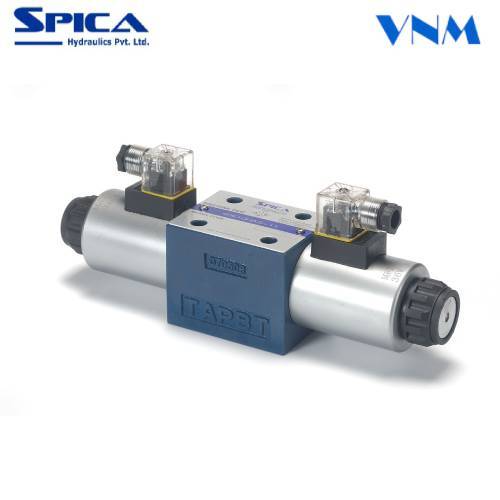
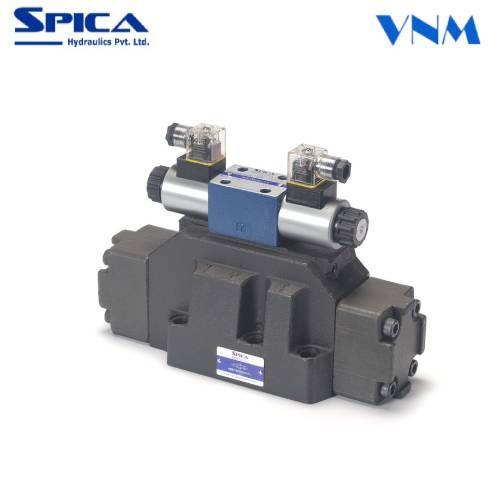
We hold expertise in offering a wide gamut of precision engineered SPICA Directional Control Valves. In order to manufacture these valves as per the set industry norms, our vendors use superior quality raw material and cutting-edge technology. Owing to their attributes like strong construction, high tensile strength and sturdiness, these valves are highly admired among clients. Available in various specifications, we offer these SPICA Directional Control Valves at very reasonable price to the clients as per their specific need.
Versatile Actuation MethodsSpica valves accommodate manual, solenoid, and pneumatic actuation styles, letting users tailor their control solutions to specific operational needs. This versatility makes them ideal for an array of industrial automation and mobile equipment applications where flexibility and reliability are essential.
Robust Construction and Standards ComplianceManufactured from high-grade alloy steel, Spica Directional Control Valves offer superior durability and performance. They comply with ISO 4401 / CETOP 3, ensuring international compatibility and safe integration into hydraulic systems. This solid construction supports pressures up to 315 bar.
Optimized for Flexible InstallationWith the availability of subplate or manifold mounting options and port thread choices (BSP or NPT), installation is straightforward and adaptable to most setups. The valves spool-type structure and hydraulic operation provide reliable and consistent flow control in demanding environments.
FAQs of Spica Directional Control Valves:
Q: How do I choose the correct actuation option for my Spica Directional Control Valve?
A: The right actuation typemanual, solenoid, or pneumaticdepends on your systems design and control requirements. Manual operation is suitable for direct user control, solenoids are ideal for automated or remote electrical actuation, and pneumatic models work well in environments where compressed air is available.
Q: What is the maximum flow rate and pressure these valves can handle?
A: Spica Directional Control Valves are designed for a maximum flow rate of up to 60 litres per minute (LPM) and can withstand operational pressures up to 315 bar, making them appropriate for a wide range of industrial applications.
Q: When should I use BSP versus NPT port threads?
A: BSP and NPT are two common thread standards. Choose BSP threads if your existing hydraulic system uses British Standard Pipe fittings, or NPT threads if it uses National Pipe Tapered fittings. Selecting the matching thread type ensures a secure, leak-free connection.
Q: Where can Spica Directional Control Valves be installed?
A: These valves can be installed in both subplate and manifold mounting configurations, offering flexibility for integration into various hydraulic setups across industrial, mobile, and automation applications.
Q: What electrical connections are available for the solenoid versions?
A: For solenoid-actuated Spica valves, electrical connections offered are DIN 43650 connectors and flying lead wires, allowing easy integration with existing electrical controls.
Q: How do I determine the correct valve size for my application?
A: Standard valve sizes are available, and you should consult the product catalogue or contact a distributor or supplier to select the optimal size based on your applications flow and pressure requirements.
Q: What are the main benefits of using Spica Directional Control Valves?
A: Benefits include robust construction, reliable hydraulic control, compatibility with international standards, versatile mounting and threading options, and suitability for diverse environmentsfrom industrial plants to mobile machinery.

 Mon-Sat 9.00 AM - 6.00 PM







 Send Inquiry
 Send Inquiry
 Send SMS
